Bloom & Build Colorful Garden Play Set | Five Cheerful Blooms, Leafy Details & Little Worlds of Imagination
Bloom & Build Colorful Garden Play Set | Five Cheerful Blooms, Leafy Details & Little Worlds of Imagination
Couldn't load pickup availability

Bloom & Build Colorful Garden Play Set | Five Cheerful Blooms, Leafy Details & Little Worlds of Imagination

🌼 A Little More Color. A Little More Imagination. A Garden That Starts with You.
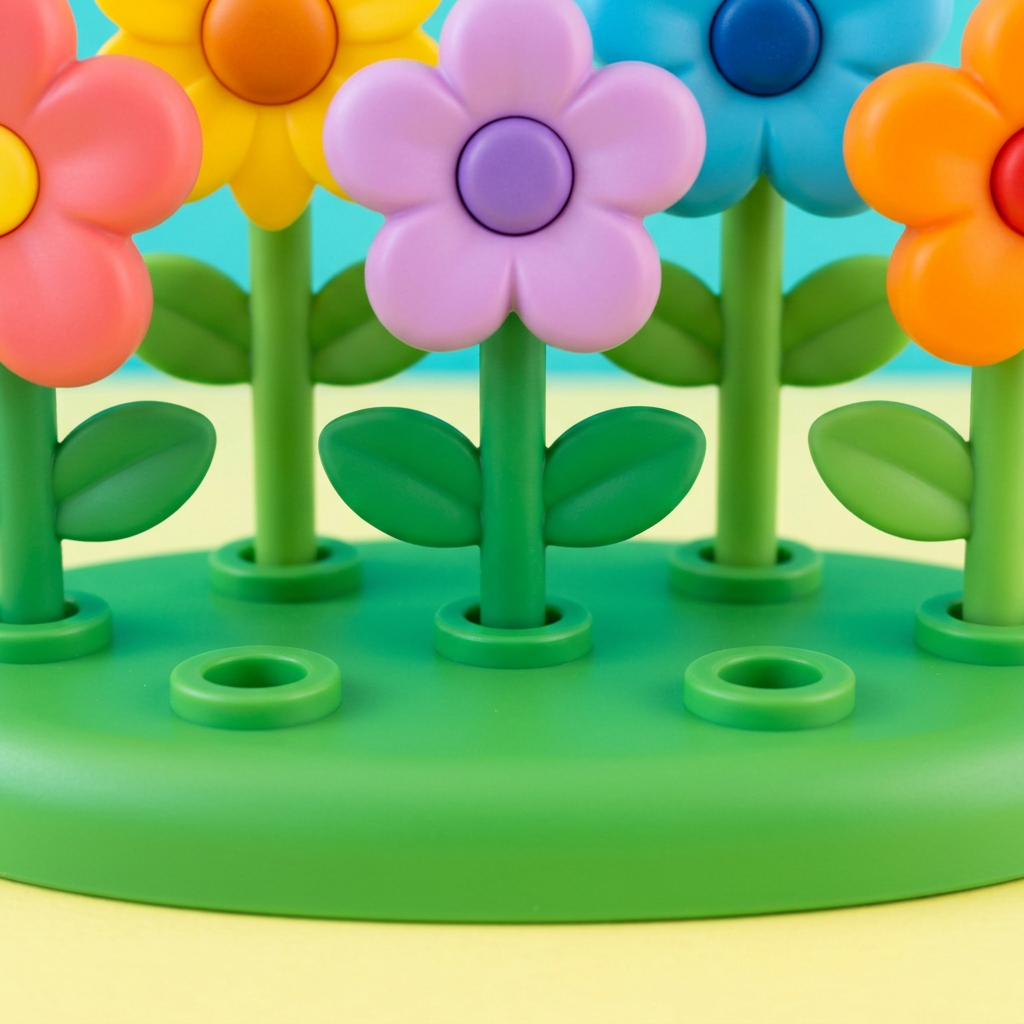
A coral-pink flower leans into the scene. Sunshine yellow rises behind it. Lilac, sky blue and orange add their own cheerful notes above a bright green base. Bloom & Build begins with a simple visual pleasure: different colors coming together to make one small world feel complete.
This flower-garden concept brings rounded blooms, leafy stems and an oval foundation into a coordinated tabletop composition. Its mood is creative rather than complicated. There is no realistic landscape to copy and no perfect garden to reproduce. The image provides a starting palette, while the story of the garden remains yours to imagine.
Begin with the Feeling You Want to Create
Before thinking about an arrangement, choose a mood. Is this a sunny garden after a long winter? A bright welcome for an imaginary visitor? A tiny festival of flowers that nobody has seen before? A mood gives the colors a purpose beyond simply matching one another.
You might be drawn to pink and yellow for a warmer feeling, or to blue and lilac for a gentler contrast. Orange can become the surprising accent that changes the whole scene. There is no need to explain the choice in formal terms. “These look happy together” can be a perfectly good beginning.
A Closer Look at the Five Blooms
The coral-pink flower pairs broad rounded petals with a yellow center. Nearby, the yellow bloom introduces a warmer orange circle. Lilac stays softly tonal, while the sky-blue flower uses a deeper blue center to define its shape. The orange bloom finishes with a contrasting red center, bringing another warm detail into the arrangement.
These repeated circles give the flowers a family resemblance without making them identical. The leaves repeat a broad, simple shape below the petals. Green ties the whole composition together, creating a shared visual foundation for five colors that could otherwise feel unrelated.
Compose with Your Eyes First
Look at the photograph and trace the outline of the arrangement. Notice where one bloom sits higher than another, where leaves fill a gap, and how the green base holds the scene together visually. This is a useful way to enjoy the design even before deciding what a future physical version should allow you to change.
Ask what would happen to the mood if the blue flower became the main character or if the warm colors were grouped together. You can describe an alternative arrangement, draw it on paper or invent a name for it. Final interchangeable parts and assembly possibilities remain subject to the production design; the image alone does not establish those functions.
Give Your Garden a Place in the World
A little flower scene can belong to a much bigger imaginary setting. Perhaps it sits outside a tiny café, welcomes visitors to a storybook house or marks the entrance to a secret park. Choose what lies just beyond the edge of the base. A path? A pond? A gate that only opens when someone says something kind?
The surrounding world does not have to be supplied as a set. A spoken description can create it. If you choose to add your own drawing or paper sign, it becomes an optional extension of the scene, not something represented as included with the proposed toy.
Three Creative Invitations, Three Different Gardens
The celebration garden: imagine that someone special is arriving. Which flower would greet them first, and what would the garden be called? Add a welcome speech or invent a tiny ceremony around the colors. The emphasis is on making another person feel included in the story.
The sunset garden: describe how pink, yellow and orange might look as the day comes to an end. Let blue become the first hint of evening and lilac the color of a distant cloud. The same flowers can suggest a time of day rather than a place.
The curious visitor's garden: an imaginary traveler has never seen a flower. How would you describe a petal without using the word “petal”? How would you explain why the colors feel different? Familiar shapes suddenly become something worth observing more carefully.
Make It a Conversation, Not a Competition
Shared creative time can begin with a small choice. One person selects a color, another gives it a name, and someone else invents a visitor for the garden. Take turns adding details rather than deciding whose version is best. A surprising idea can become the part everyone remembers.
You can also try describing the garden from a different viewpoint. What would it look like to a very small imaginary creature? Which bloom would appear tallest? Where would a visitor find shade? These questions stay connected to the pictured forms while opening up a different kind of story.
The Details That Keep the Scene Coordinated
The oval green base introduces a soft outline rather than a sharp rectangular boundary. Upright stems repeat throughout the composition, while the leaves create a rhythm between the flowers. The rounded petal forms echo the circular centers. These recurring shapes make the concept feel like a collection rather than a handful of unrelated decorative pieces.
The photographs focus on the assembled garden concept. Background surfaces and styling are not included accessories, and adult-hand scale, where shown in future imagery, should not be treated as a measurement. Exact dimensions and component details need to come from the physical sample.
A Small Ritual for a Brighter Afternoon
At the end of a creative session, give the garden a title. Ask each person to choose one detail they like. Leave a question unanswered so that another day has somewhere to begin: who is visiting tomorrow, which season comes next, or what surprise is hidden just outside the scene?
The pleasure is not in reaching a single correct result. It is in noticing how a little color can suggest a setting, how a setting can suggest a story, and how a story can make an ordinary afternoon feel more personal. Begin with one bloom and follow the idea wherever it grows.